

Program Impact
Celebrating 20 Years of Excellence

The Critical Language Scholarship (CLS) Program provides funded, intensive summer study abroad in languages critical to U.S. national security and economic prosperity. Participants complete the equivalent of one academic year of language instruction in eight weeks.
20 Years by the numbers
Launched in 2006 under the U.S. Government's National Security Language Initiative, the CLS Program equips America’s next generation of government, business, and scientific leaders with foreign language skills, international experience, and intercultural competence that support U.S. interests.
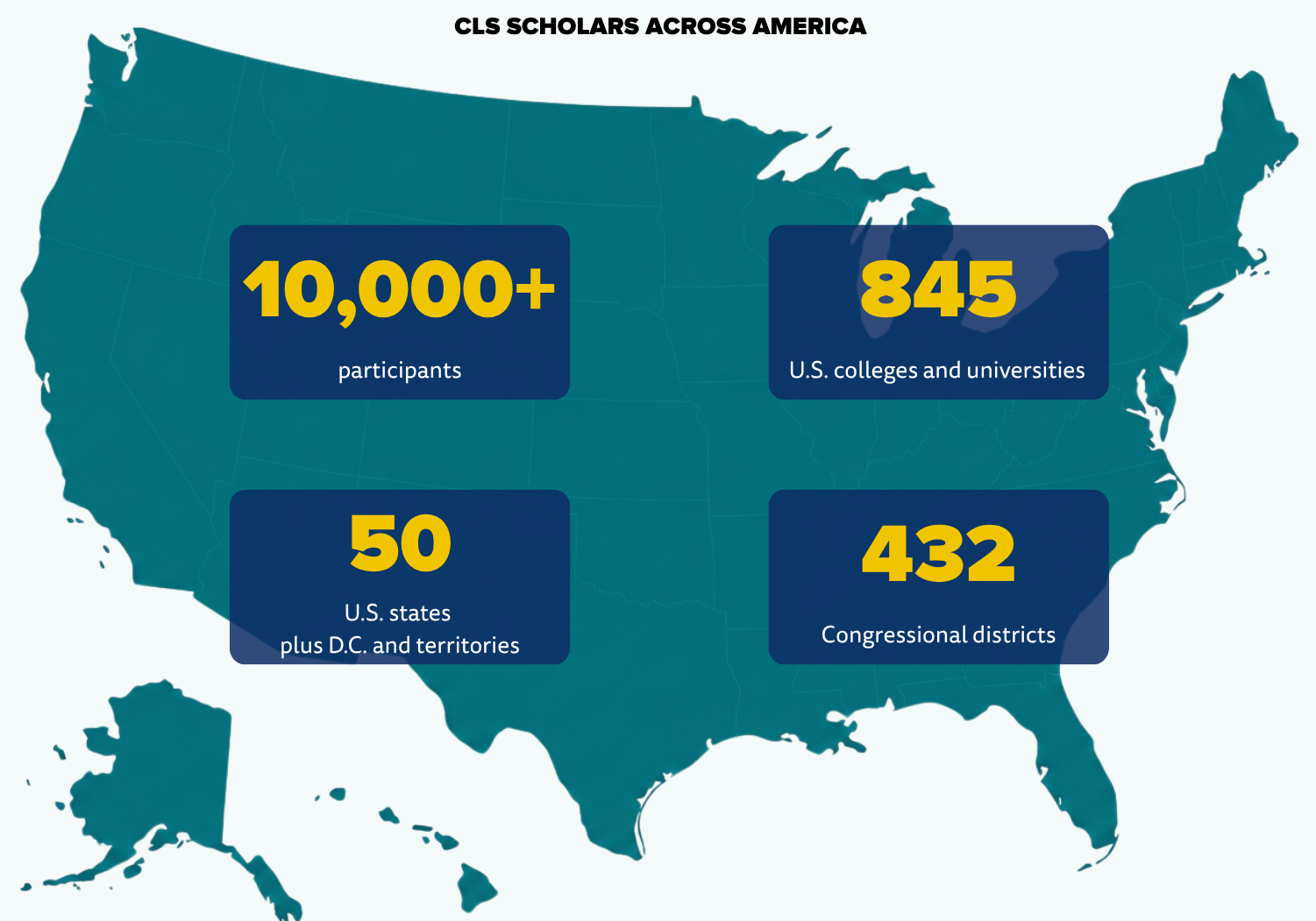
The CLS Program draws talent from every corner of the country and institutions of every size and type, ensuring America's language capacity reflects the full breadth of the United States.
- 28% received or were eligible to receive need-based federal financial aid
- 19% grew up in rural areas or attended rural institutions
- 19% were the first in their families to attend college
- 6% of alumni are active-duty military or veterans
"CLS strengthened my communication skills and global perspective in ways that directly inform my leadership today. In an increasingly digital world, my CLS experience reinforced the value of human interaction, cultural understanding, and trust — skills I draw on regularly as an officer in the U.S. Navy's Submarine Force."
– CLS Japanese Scholar
LANGUAGE OUTCOMES
The CLS Program is built around one goal: rapid, measurable language growth. Participants are fully immersed in the language — in the classroom, in their housing, and in the community. More than 15 hours per week of intensive instruction is reinforced by language partners, cultural programming, and daily life in the host country. Eight weeks of immersion produces significant, documented gains:
- 96% report strengthened language proficiency and cross-cultural communication
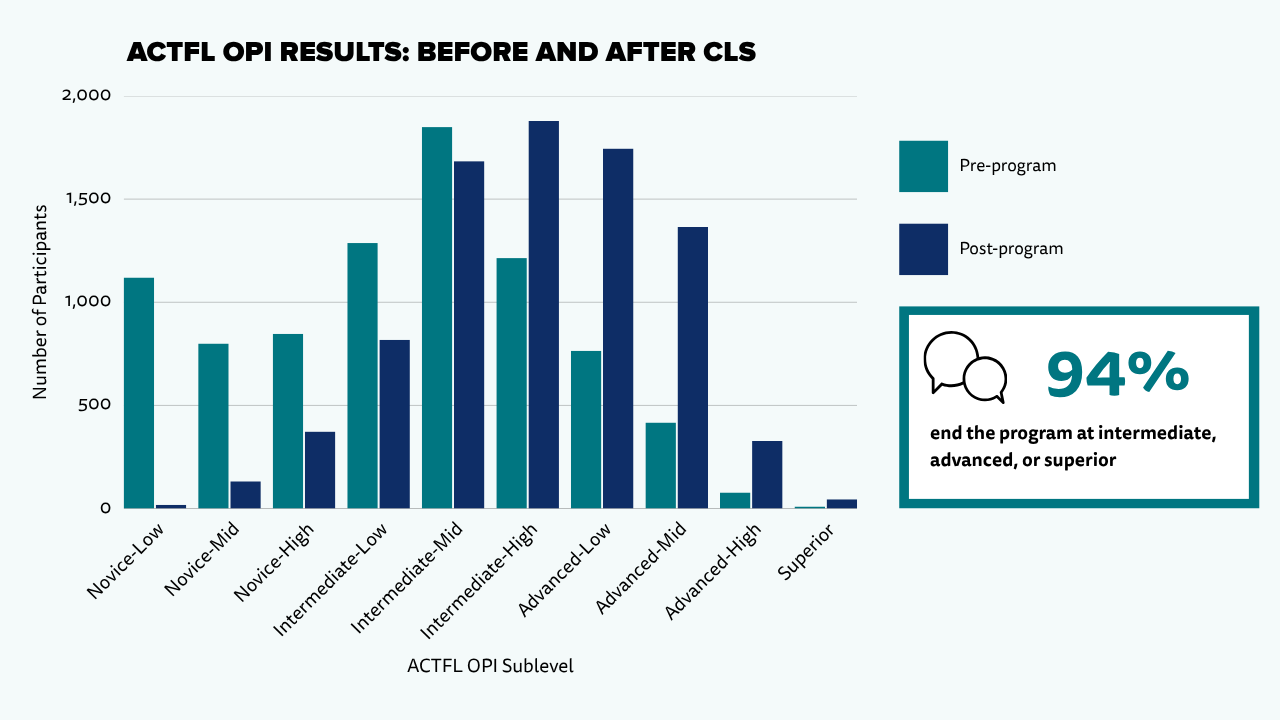
- 94% reach intermediate or advanced proficiency by program completion
- 89% studied or used their CLS language in the past year
"Understanding a culture is essential for effective diplomacy, and the best way to gain that understanding is through its language. CLS has equipped me not only with linguistic tools but also with cultural insights that will allow me to contribute to U.S. national security, diplomacy, and long-term international engagement."
– CLS Persian Scholar
Since 2010, every CLS participant has taken the ACTFL Oral Proficiency Interview (OPI) — a nationally recognized assessment of real-world language ability — before and after the program. OPI ratings align directly with the Interagency Language Roundtable (ILR) scale, the proficiency standard used by U.S. government agencies. Alumni receive a certified record of their language proficiency that they can share with universities, federal agencies, and employers.
NATIONAL SECURITY AND LEADERSHIP
Language is a strategic asset. CLS alumni are equipped to advance U.S. national security, economic competitiveness, and American leadership wherever those interests are at stake.
- 99% are prepared to advance U.S. national priorities
- 85% are prepared to strengthen U.S. leadership in global engagement
- 75% are prepared to support national security or global stability
- 69% are prepared to support U.S. economic growth or innovation
"Russian is critical to the foreign relations of the United States, especially in my sphere, nuclear nonproliferation and arms control. My elevated language skills will assist me in finding work and in doing my work well for the national security and better future of the United States."
– CLS Russian Scholar
CAREER AND WORKFORCE OUTCOMES
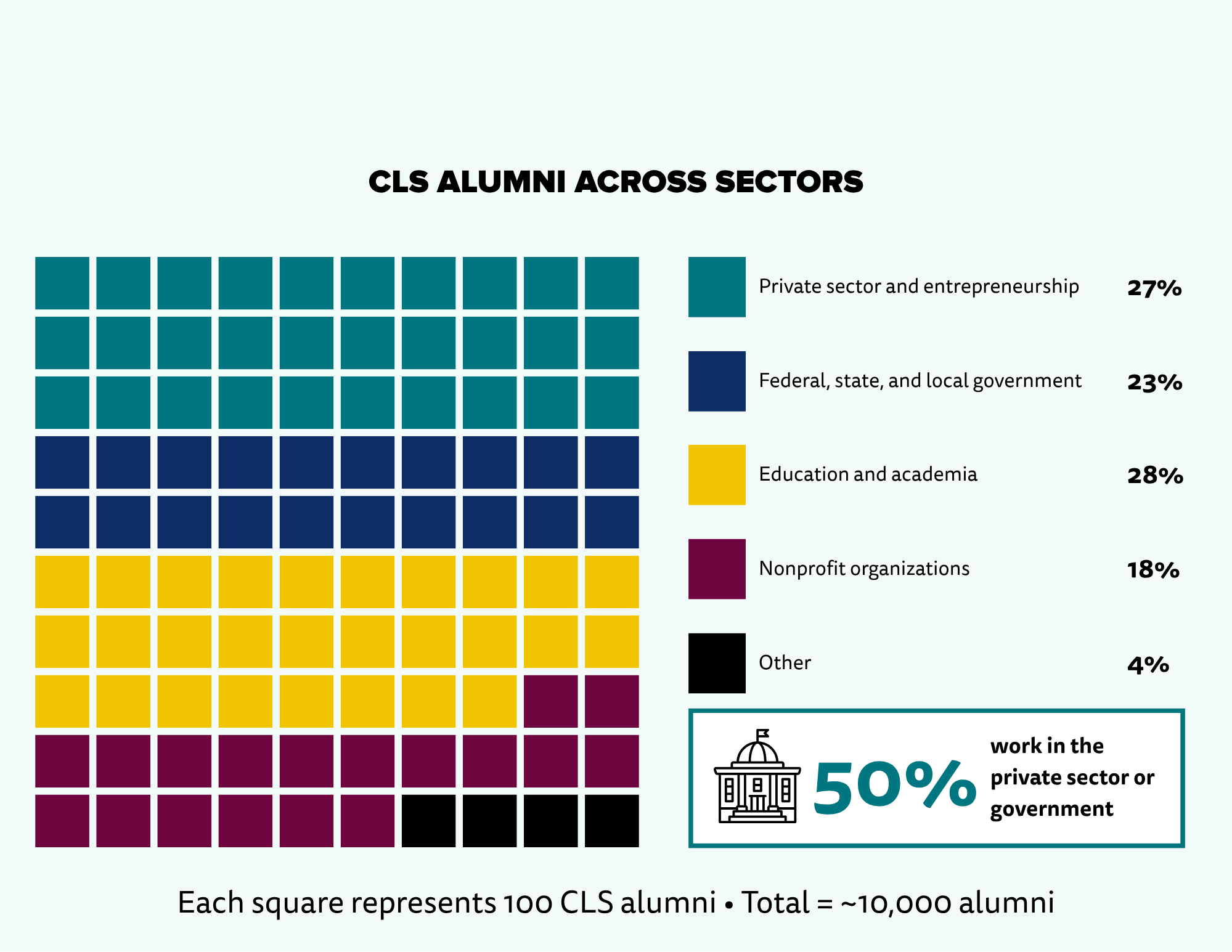
CLS participants gain linguistic, intercultural, and professional skills that translate directly into the workplace — and into careers that serve U.S. interests across every sector.
- 96% report strengthened language proficiency and cross-cultural communication
- 68% report stronger workforce readiness and career development
- 66% apply regional knowledge at work
- 55% use their CLS language in their current job
“In my role at Amazon, I work closely with Chinese sellers and logistics partners to manage cross-border inventory. I use Mandarin daily, but more importantly, my cultural understanding helps build trust and long-term relationships — essential for resolving challenges and ensuring effective collaboration in global supply chairs.”
– CLS Chinese Scholar